Unlock Your Creative Vision with Hidden Nature Woods Junk Journal Pages
There’s a specific kind of creative block that hits when you’re staring at a blank digital canvas or a fresh project brief. You have the idea, the brand message, the story you want to tell—but the foundational texture is missing. For designers, crafters, and content creators working in the modern aesthetic space, finding assets that feel authentic, high-resolution, and versatile is half the battle. This is exactly where a resource like the Hidden Nature Woods Junk Journal Pages collection steps in, offering not just images, but a complete atmosphere ready to be integrated into your workflow.
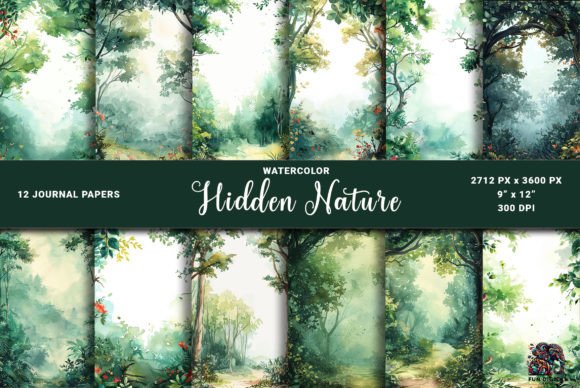
This isn't just another set of random textures. The Hidden Nature Woods Junk Journal Pages bundle consists of twelve distinct digital papers designed to evoke the raw, organic beauty of the natural world. When you download this set, you are getting High-quality files at 300 DPI. This resolution is critical; it ensures that whether you are printing a large poster or zooming in for a digital mockup, the details remain crisp. The dimensions are generous, coming in at 9” x 12” (2712 px x 3600 px) and 3600 px x 3600 px in PNG format. This variety in sizing gives you the flexibility to use them for vertical layouts, square social media posts, or seamless tiling depending on your project requirements.
The Aesthetic: Bridging Rustic Charm and Modern Design
Understanding the visual personality of Hidden Nature Woods Junk Journal Pages is key to using them effectively. The style leans heavily into the "junk journal" aesthetic—a look that has exploded in popularity across scrapbooking, packaging design, and brand identity work. We are talking about layers of visual history: distressed edges, botanical sketches, muted earth tones, and the kind of texture that makes a flat surface look tangible. It feels like a walk through a forgotten forest, captured on vintage paper.
For the graphic designer or brand strategist, this style offers a powerful counterpoint to the ultra-clean, sterile minimalism that has dominated web design for the last decade. While a sans serif font paired with white space is standard for tech companies, brands in the wellness, eco-friendly, artisanal, or boutique sectors often struggle to find that "human touch." These pages provide that warmth instantly. They serve as a premium font for the background of your designs—providing a stage upon which your typography and content can perform.
Consider the psychological impact. When a potential customer or reader sees a background that mimics nature—bark textures, dried leaves, subtle imperfections—it triggers a sense of calm and trust. It suggests that the brand behind the content is grounded, authentic, and pays attention to detail. In a crowded digital marketplace, that emotional resonance is a significant competitive advantage.
Practical Applications: Beyond the Scrapbook
While the name suggests traditional crafting, the utility of the Hidden Nature Woods Junk Journal Pages extends far beyond hobbyist scrapbooking. Because these are high-resolution design assets free of watermarks, you have the legal and technical freedom to use them commercially and personally as many times as you like.
Here is how different professionals can leverage this collection:
- For the Entrepreneur and Small Business Owner: Packaging is your silent salesperson. If you sell handmade candles, soaps, or artisanal foods, using these textures as wrapping paper or box inserts elevates the perceived value of your product instantly. It turns a generic item into a "curated experience." You can also use them for logo design backgrounds, creating a badge-style logo that feels established and historic.
- For Bloggers and Content Creators: Visual consistency is the key to a strong Instagram grid or Pinterest presence. Using these papers as the base for quote cards or text overlays creates a cohesive feed. Because the files are 300 DPI, you can extract specific sections—like a mossy corner or a bark texture—to create unique social media graphics that stand out against the polished, plastic look of standard stock photos.
- For Publishers and Editorial Designers: Editorial design isn't just about layout; it's about mood. If you are designing a magazine cover, a book jacket, or a newsletter for a nature or travel niche, these pages provide an immediate atmospheric backdrop. They work beautifully behind serif fonts for a classic look, or script fonts for a more romantic, handwritten feel.
- For Invitation Designers: Weddings, elopements, and garden parties demand stationery that sets the tone. A junk journal aesthetic is perfect for "boho" or rustic themes. These papers can be printed on heavy cardstock to create invitations that physically feel different in the hand—textured, substantial, and bespoke.
Integrating Texture with Typography
One of the most common mistakes in modern typography is treating text and background as separate entities rather than a unified composition. When working with a textured asset like Hidden Nature Woods Junk Journal Pages, your font choice becomes even more critical.
Because these backgrounds are busy and detailed, you need to ensure your text remains legible. This is where the principles of visual hierarchy come into play. You generally have two paths:
- High Contrast Pairing: Use a bold, clean sans serif font in white or a dark charcoal. The clean geometry of the letters will pop against the organic chaos of the woods texture. This works well for headlines on posters or web banners.
- Harmonious Pairing: Use a handwritten font or a textured script font. This creates a monochromatic, immersive look. However, to ensure readability, you should place a semi-transparent overlay (a vellum effect) between the paper and the text, or use the textures only for borders and margins, leaving a cleaner central area for the copy.
The files provided in this collection allow for this flexibility. Since you have both vertical (9x12) and square (3600x3600) formats, you can plan your layouts without worrying about awkward cropping. You can print the vertical sheets for physical journaling and use the square files for digital web design elements.
Evaluating Fit and Workflow Integration
Before integrating any new asset into your library, it’s worth doing a quick "fit check." Does the visual style of the Hidden Nature Woods Junk Journal Pages align with your current brand guidelines? If your brand is strictly futuristic, neon, and high-gloss, these papers might clash. However, if your brand values include words like "organic," "heritage," "warm," "earthy," or "handmade," this is an essential addition.
From a workflow perspective, the PNG format is the industry standard for a reason. It supports transparency and lossless compression. This means you can layer these papers in Photoshop, Illustrator, or Canva without degrading the quality. You can adjust the opacity, desaturate them to black and white, or blend them with other textures to create entirely new design assets.
Finally, the value of a commercial font or asset often comes down to licensing. The fact that these are free of watermarks and licensed for repeated use means you aren't renting a look; you are owning a tool. Whether you are printing 500 flyers or posting one digital image, the cost-per-use is negligible, offering a high return on investment for marketers and hobbyists alike.
Ultimately, the Hidden Nature Woods Junk Journal Pages are more than just digital paper. They are a bridge between the digital world and the tactile reality of nature. For the creative professional looking to add depth, history, and warmth to their work, this collection provides a robust, high-quality foundation for a wide array of projects.